
Chapter: Cellular Respiration
Cellular Respiration
Cellular respiration is the set of metabolic reactions in cells that break down food molecules such as sugars, amino acids, and fats to release energy and convert it into ATP, the the main energy currency of all living things. This process is catabolic, meaning it involves breaking large, energy-rich molecules into smaller, more stable products while releasing energy as chemical bonds are rearranged. The released energy is captured step by step through many linked reactions, most of which are redox reactions that transfer electrons in a controlled way so energy is not lost all at once.
Rather than occurring in a single reaction, cellular respiration happens through a sequence of stages that gradually extract energy from nutrients. The final products include ATP along with waste molecules such as carbon dioxide and water. ATP stores energy in its high-energy phosphate bonds, especially the terminal phosphate bond, which can be broken relatively easily to release energy for cellular work like biosynthesis, movement, and transport across membranes.
Overall, cellular respiration (along with fermentation in some organisms or conditions) is a primary way cells harvest energy stored in organic molecules. By breaking chemical bonds in food and forming more stable bonds in the products, cells convert stored potential energy into usable energy that powers all major life processes.
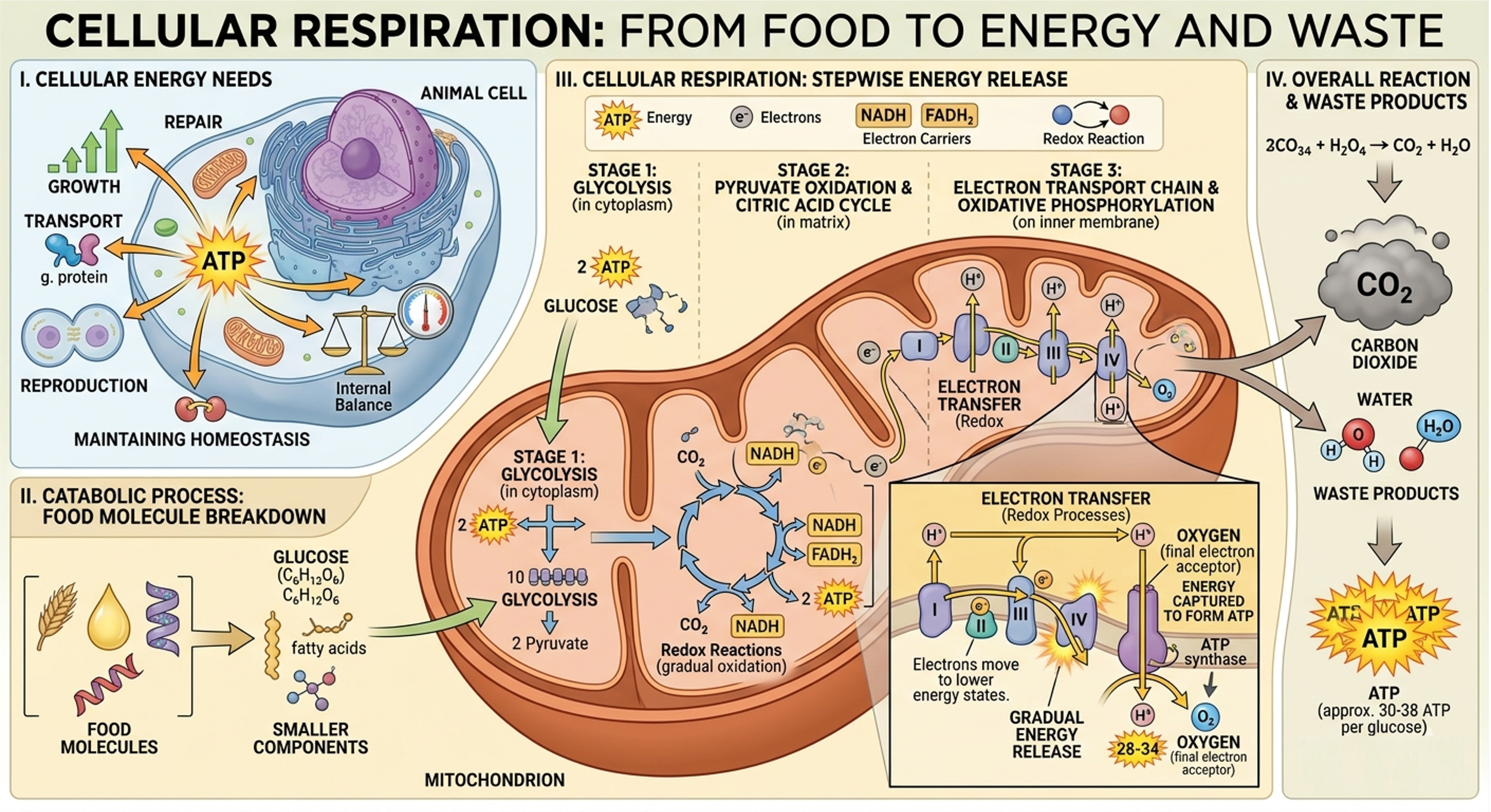
Figure 1. Cellular Respiration Overview. Cellular respiration breaks down food molecules like glucose to produce ATP. Energy is released step by step through redox reactions. Oxygen acts as the final electron acceptor, producing carbon dioxide and water as waste.
ATP: The Energy Currency of Cells
Adenosine triphosphate, commonly known as ATP, is the main energy-carrying molecule in cells. It can be thought of as a “loaded chemical spring” that stores energy, moves through the cell, and releases that energy when it is broken apart. When ATP is broken apart, it splits into adenosine diphosphate (ADP) and an inorganic phosphate group (P), a process (known as dephosphorylation) that releases energy for cellular work.
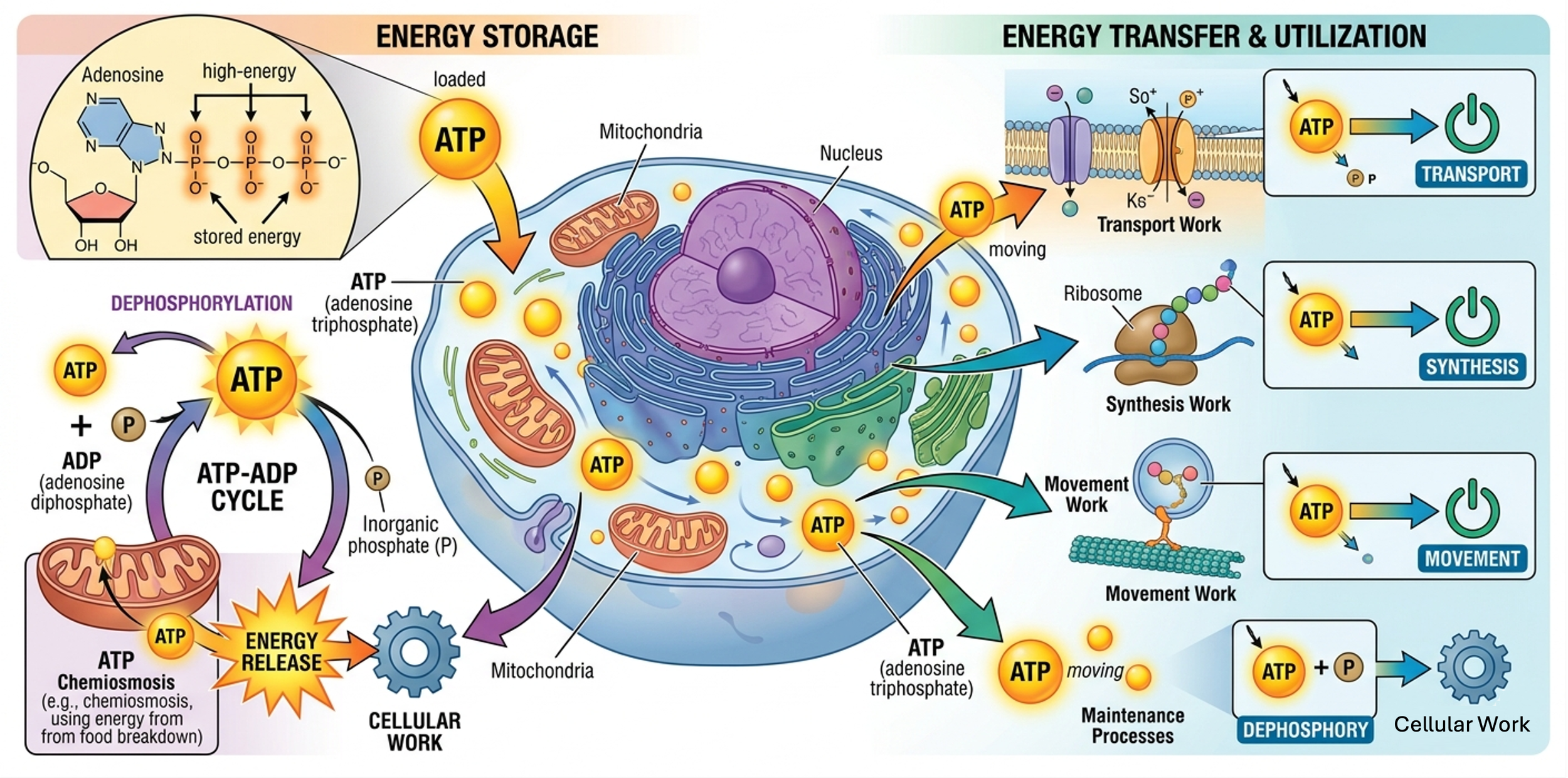
Figure 2. ATP as the energy currency of life. ATP is the main energy-carrying molecule in cells. It stores energy and releases it when broken down into ADP and inorganic phosphate through dephosphorylation. This released energy powers essential cellular activities.
The General Equation for Cellular Respiration
In aerobic respiration, glucose (C₆H₁₂O₆) reacts with oxygen (O₂) to produce carbon dioxide (CO₂), water (H₂O), and ATP. The general equation for cellular respiration is:
C₆H₁₂O₆ + 6O₂→ 6CO₂ + 6H₂O + ATP
This equation represents the overall reaction, but in reality cellular respiration happens through many smaller, step-by-step reactions inside the cell. Each step releases only a small amount of the energy stored in glucose, which allows the cell to capture energy efficiently in the form of ATP instead of losing it all at once as heat.
A simple way to understand this is to think about your own body. The food you eat is broken down into glucose, which serves as a fuel source. You inhale oxygen, which is required for this process. At the same time, you exhale carbon dioxide and release water as waste products through processes like breathing and urination. These are the byproducts of cellular respiration, and the entire system exists to convert the energy in food into ATP, which your body uses to survive and function.
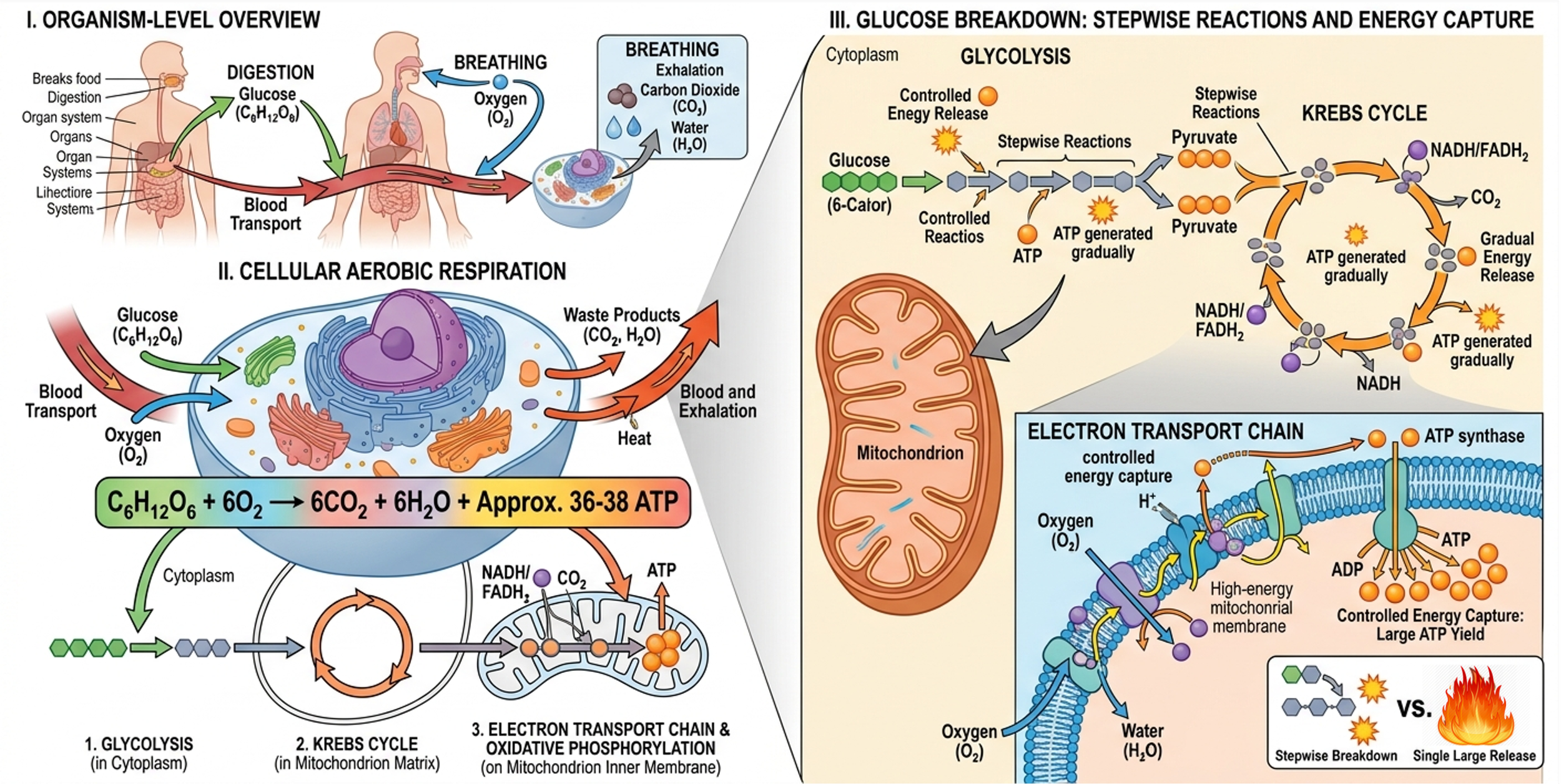
Figure 3. General Equation foe Cellular Respiration. In aerobic respiration, glucose reacts with oxygen to produce carbon dioxide, water, and ATP. Although shown as one equation, the process occurs through many small steps that release energy gradually, allowing cells to efficiently capture it as ATP while producing carbon dioxide and water as waste.
Cellular Respiration and Redox Reactions
Cellular respiration is a series of reduction–oxidation (redox) reactions. Redox reactions are chemical processes in which the oxidation state of atoms changes through the transfer of electrons. They always involve two linked parts: oxidation and reduction.
Oxidation is the loss of electrons from an atom or molecule. When a substance is oxidized, it becomes more positively charged because it has lost negatively charged electrons. Reduction is the gain of electrons, which makes a substance more negatively charged. The two processes always occur together: when one molecule is oxidized, another must be reduced. A simple example is the formation of sodium chloride (NaCl), where sodium loses an electron (is oxidized) and chlorine gains that electron (is reduced), forming oppositely charged ions that attract each other.
Cellular respiration uses this same principle to extract energy from glucose. As glucose is broken down, its carbon atoms are oxidized, meaning they lose electrons. At the same time, oxygen is reduced because it gains those electrons. This controlled transfer of electrons releases energy in small, usable amounts instead of a single large burst. That energy is then used by the cell to produce ATP from ADP and inorganic phosphate. Together, these linked redox reactions make up the overall process of cellular respiration. Inside cells, energy is essentially moved by transferring electrons between molecules. Instead of releasing energy all at once like burning methane in combustion, cells use carrier molecules to control and capture it.
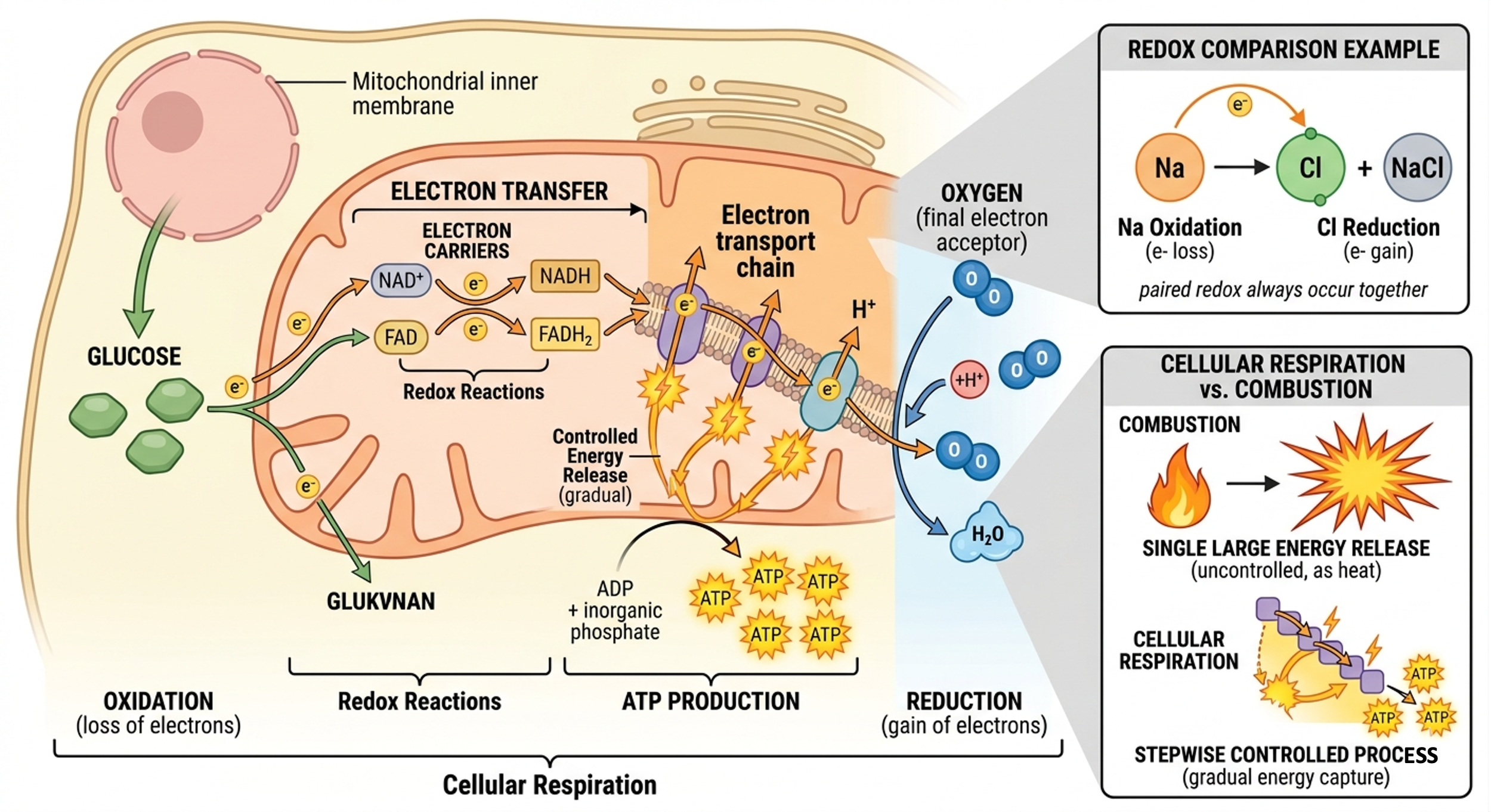
Figure 4. Redox Reactions. Cellular respiration is a series of redox reactions in which electrons are transferred from glucose to oxygen. Glucose is oxidized and oxygen is reduced, releasing energy in small, controlled amounts that are used to produce ATP. This controlled electron transfer allows cells to efficiently capture energy instead of releasing it all at once.
NAD⁺ and FAD
One of the most important electron carriers is NAD⁺, which acts as an electron acceptor (an oxidizing agent). As glucose is broken down, NAD⁺ accepts two high-energy electrons along with a hydrogen ion (H⁺), forming NADH. NADH can be thought of as an energy-loaded carrier molecule because it stores these electrons in a stable form that can later be used to help generate ATP. In other words, NADH functions as a hydrogen and electron transporter, moving energy from one part of cellular respiration to another.
Another key electron carrier is FAD, or flavin adenine dinucleotide. Like NAD⁺, FAD also acts as an oxidizing agent by accepting electrons during the breakdown of fuel molecules. However, FAD works slightly differently: it typically accepts two electrons and two hydrogen ions to become FADH₂. This reduced form, FADH₂, also carries high-energy electrons that are later used in ATP production.
Both NADH and FADH₂ serve as temporary energy storage molecules. They collect electrons released during the early stages of glucose breakdown and deliver them to later stages of cellular respiration, where their energy is used to drive the production of ATP. While NADH generally carries electrons with higher energy yield, FADH₂ enters the process slightly later and contributes a smaller but still important amount of energy. Together, these carriers make it possible for cells to capture and efficiently transfer energy rather than losing it as heat.
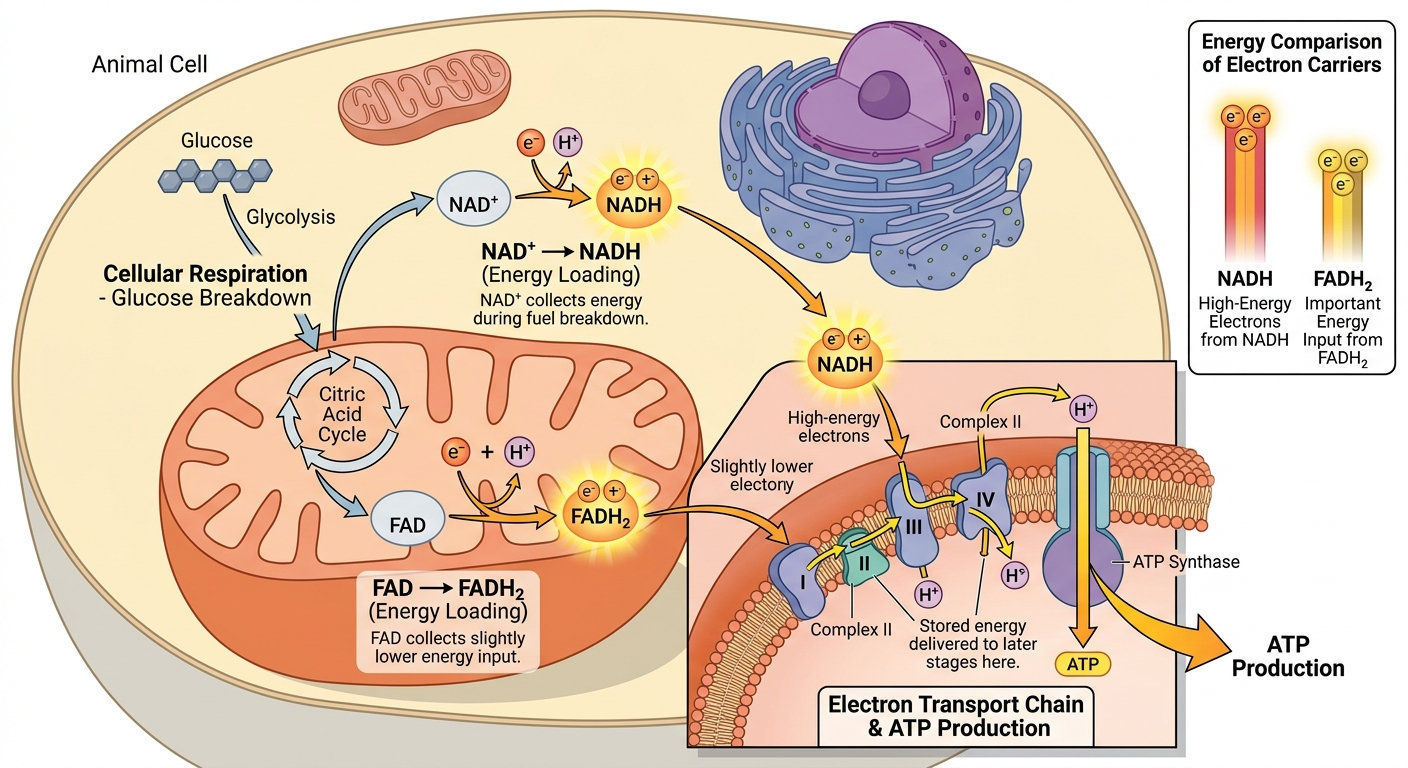
Figure 5. NAD⁺ and FAD. NAD⁺ and FAD are electron carriers that accept high-energy electrons during glucose breakdown, forming NADH and FADH₂. These molecules store energy temporarily and transport electrons to later stages of cellular respiration, where their energy is used to help produce ATP efficiently.
The Three Stages of Cellular Respiration
Cellular respiration occurs in three major stages:
Glycolysis
The Krebs Cycle (Citric Acid Cycle)
The Electron Transport Chain
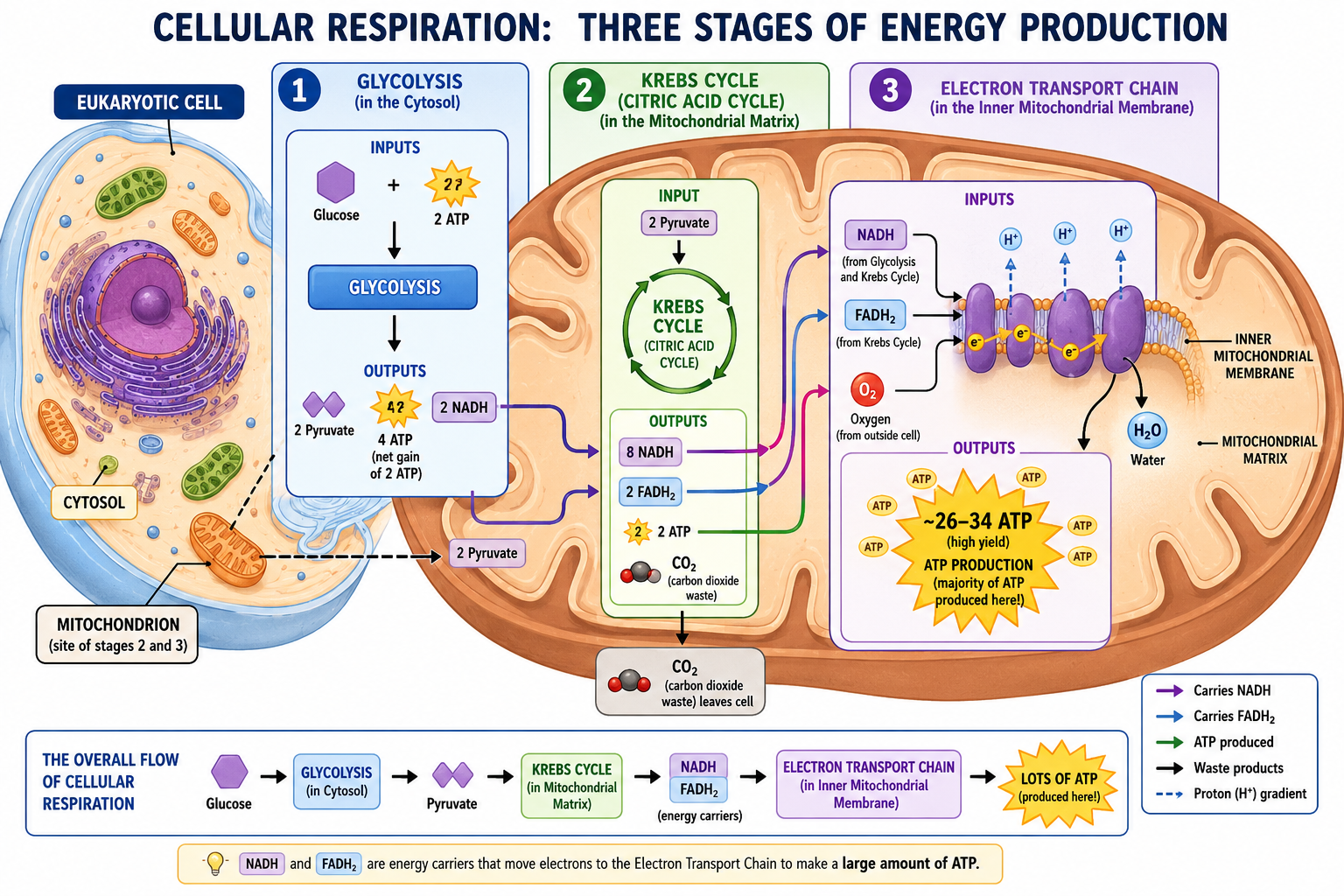
Figure 6. Steps of Cellular Respiration. Cellular respiration occurs in three sequential stages: glycolysis, the Krebs Cycle, and the Electron Transport Chain. Each stage breaks down fuel molecules further and transfers energy to produce ATP, with the final stage generating the most ATP.
Glycolysis
Glycolysis is a fundamental metabolic pathway that takes place in the cytosol (the fluid portion of the cell) and breaks one molecule of glucose into two smaller molecules called pyruvate. During this process, energy stored in glucose is gradually released and captured in the form of ATP and NADH, which are usable energy carriers for the cell.
Although glycolysis ultimately produces energy, it begins with a small energy investment. The cell uses 2 ATP molecules to start the process. This “investment phase” helps destabilize glucose and prepares it for breakdown. Once the pathway is underway, glycolysis generates 4 ATP molecules and 2 NADH molecules. This results in a net gain of 2 ATP per glucose molecule, along with 2 NADH that carry high-energy electrons for later stages of cellular respiration.
Because glycolysis does not require oxygen, it occurs in both aerobic organisms (which use oxygen) and anaerobic organisms (which do not). This universality suggests that glycolysis is one of the most ancient and evolutionarily conserved metabolic pathways, likely present in early life forms before oxygen became abundant in Earth’s atmosphere.
The overall process is an example of energy investment and return: a small amount of ATP is used upfront to unlock a larger energy payoff in the form of ATP and electron carriers. In simple terms, cells must “spend energy to make energy,” but the return is greater than the initial cost, making glycolysis an efficient and essential first step in cellular respiration.
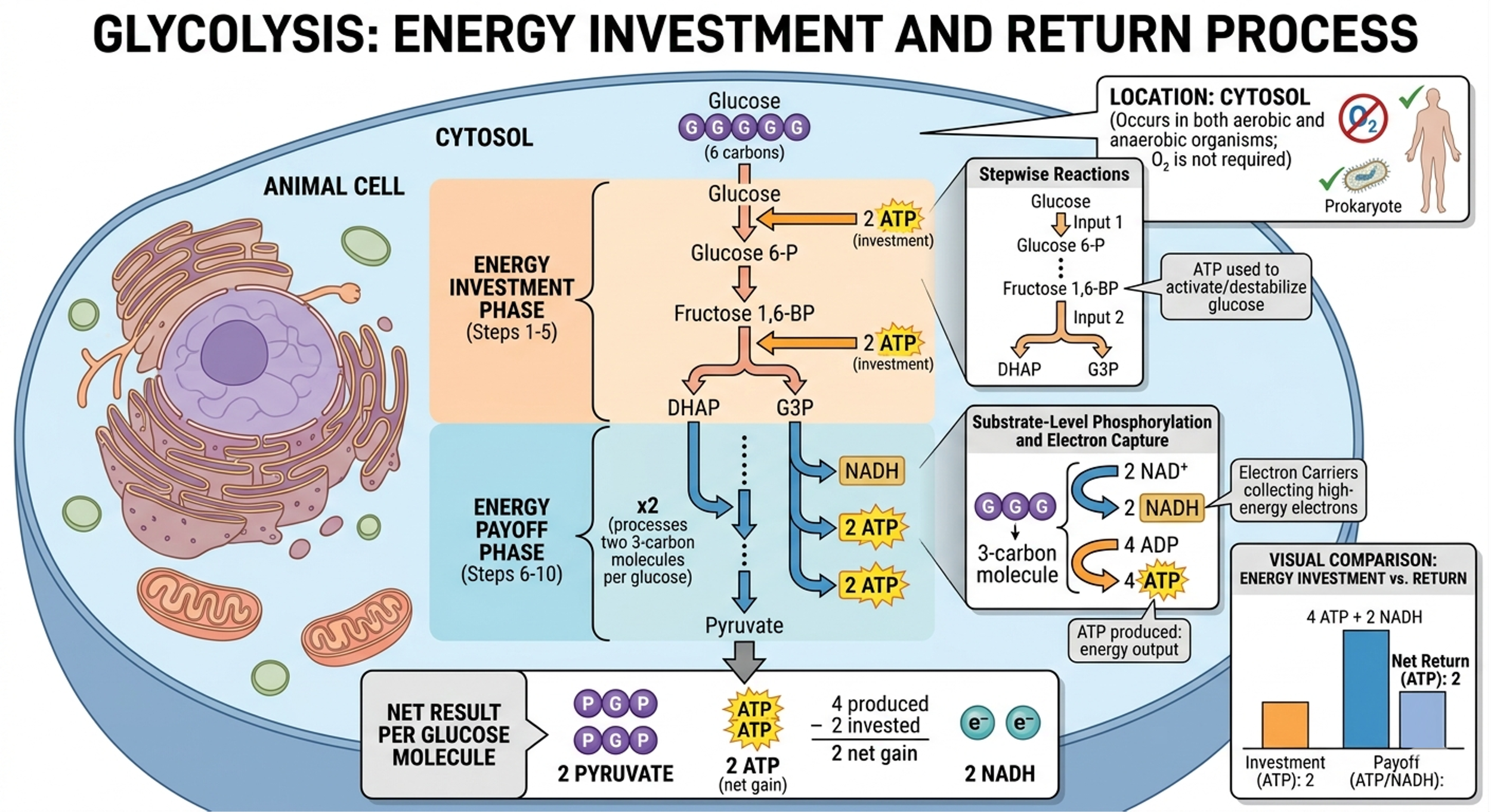
Figure 7. Glycolysis. Glycolysis is a stepwise metabolic pathway in the cytosol that breaks glucose into two pyruvate molecules. It begins with a small ATP investment and ends with a net gain of ATP and NADH. Because it does not require oxygen, glycolysis occurs in both aerobic and anaerobic organisms and is an essential first step in cellular respiration.
The Krebs Cycle
In aerobic organisms, cellular respiration continues beyond glycolysis with two additional major stages, beginning with the Krebs cycle (also called the citric acid cycle). This stage further breaks down the two pyruvate molecules produced from one glucose molecule during glycolysis. In eukaryotic cells, the Krebs cycle takes place in the mitochondrial matrix, the innermost compartment of the mitochondrion. Before entering the Krebs cycle, each pyruvate is converted into a slightly smaller molecule, which then enters the cycle for further breakdown. Although the biochemistry is complex, the key idea is that the carbon atoms from pyruvate are gradually dismantled and their stored energy is released in small, controlled steps.
This process produces a small amount of ATP directly: 2 ATP per glucose molecule in total from the cycle. But, its most important outcome is the production of high-energy electron carriers: NADH and FADH₂. During these reactions, NAD⁺ is reduced to NADH, and a similar carrier molecule, FAD, is reduced to FADH₂. These molecules store high-energy electrons that were originally held in the bonds of glucose. Rather than using this energy immediately, the cell transfers it into NADH and FADH₂ so it can be used later in much larger quantities. These electron carriers are the key output of the Krebs cycle because they feed directly into the next stage of cellular respiration, the electron transport chain, where most of the cell’s ATP is ultimately produced.
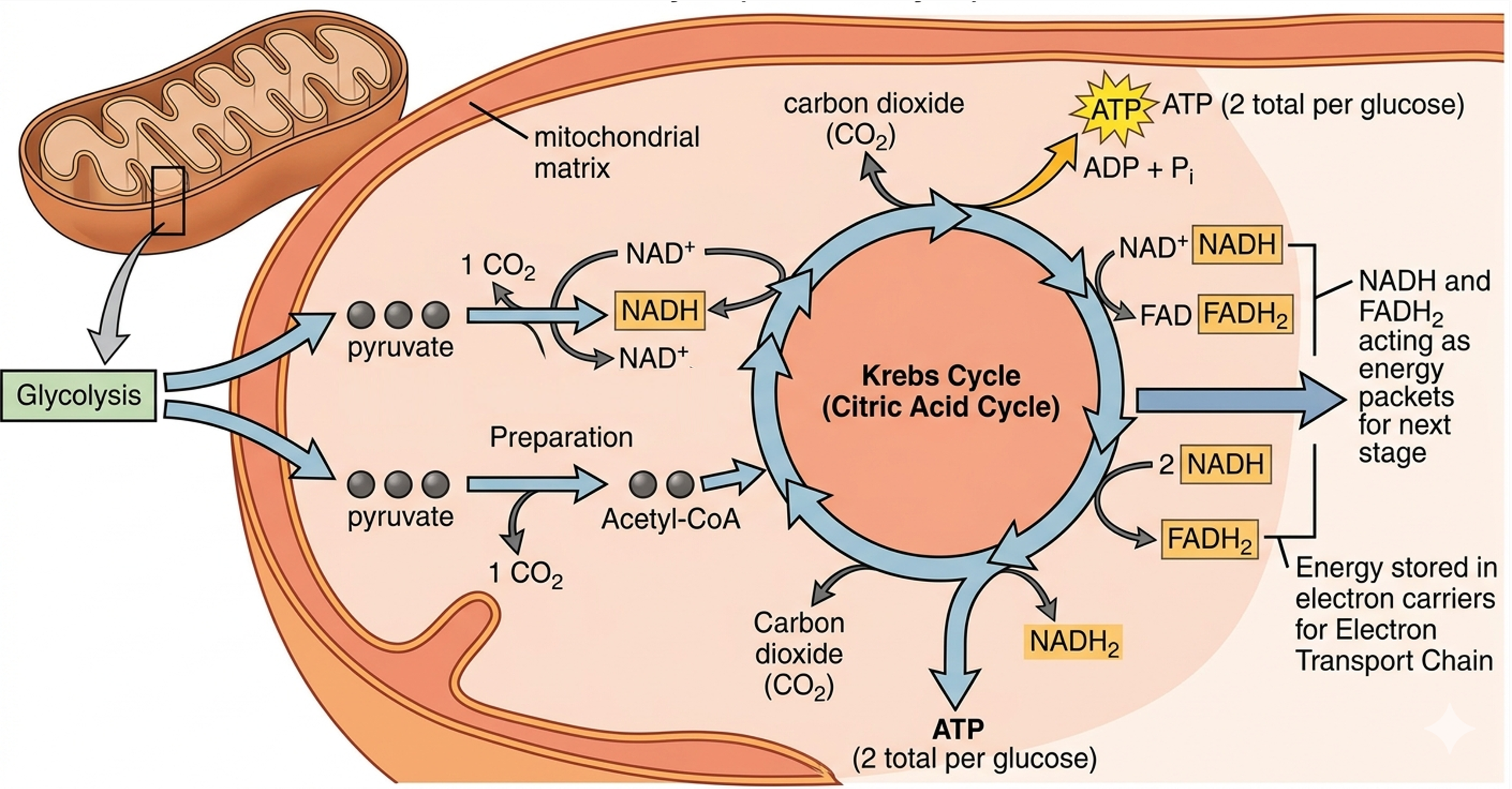
Figure 8. Kreb’s Cycle. The Krebs cycle occurs in the mitochondrial matrix and breaks down pyruvate into carbon dioxide while producing a small amount of ATP. Its main output is high-energy electron carriers NADH and FADH₂, which store energy for use in the electron transport chain, where most ATP is produced.
The Electron Transport Chain
The electron transport chain is the final stage of aerobic cellular respiration and is where most ATP is produced. It consists of a series of protein complexes embedded in the inner membrane of the mitochondrion that pass electrons from one molecule to another in a controlled sequence. Electrons carried by NADH and FADH₂ enter this chain and are transferred step by step to increasingly electronegative acceptors. At each step, electrons lose a small amount of energy. Instead of releasing this energy all at once as heat, the cell captures it and uses it to actively pump hydrogen ions (protons) from the mitochondrial matrix into the intermembrane space. This creates a strong electrochemical gradient, meaning there is a high concentration of protons on one side of the membrane and a low concentration on the other. Oxygen acts as the final electron acceptor at the end of the chain. It is highly electronegative and combines with electrons and protons to form water. Without oxygen, the entire chain would back up, which is why aerobic respiration depends on oxygen.
The buildup of protons creates stored potential energy, similar to water held behind a dam. This gradient then powers ATP synthase, a molecular enzyme that allows protons to flow back into the mitochondrial matrix. As protons move through ATP synthase, the enzyme physically rotates and uses that mechanical energy to phosphorylate ADP into ATP. This combined process—electron transport, proton pumping, and ATP synthesis—is called oxidative phosphorylation. It is responsible for producing the majority of ATP in cellular respiration, roughly 32 ATP per glucose molecule. In this way, the gradual oxidation of glucose is ultimately converted into the primary energy currency of the cell.
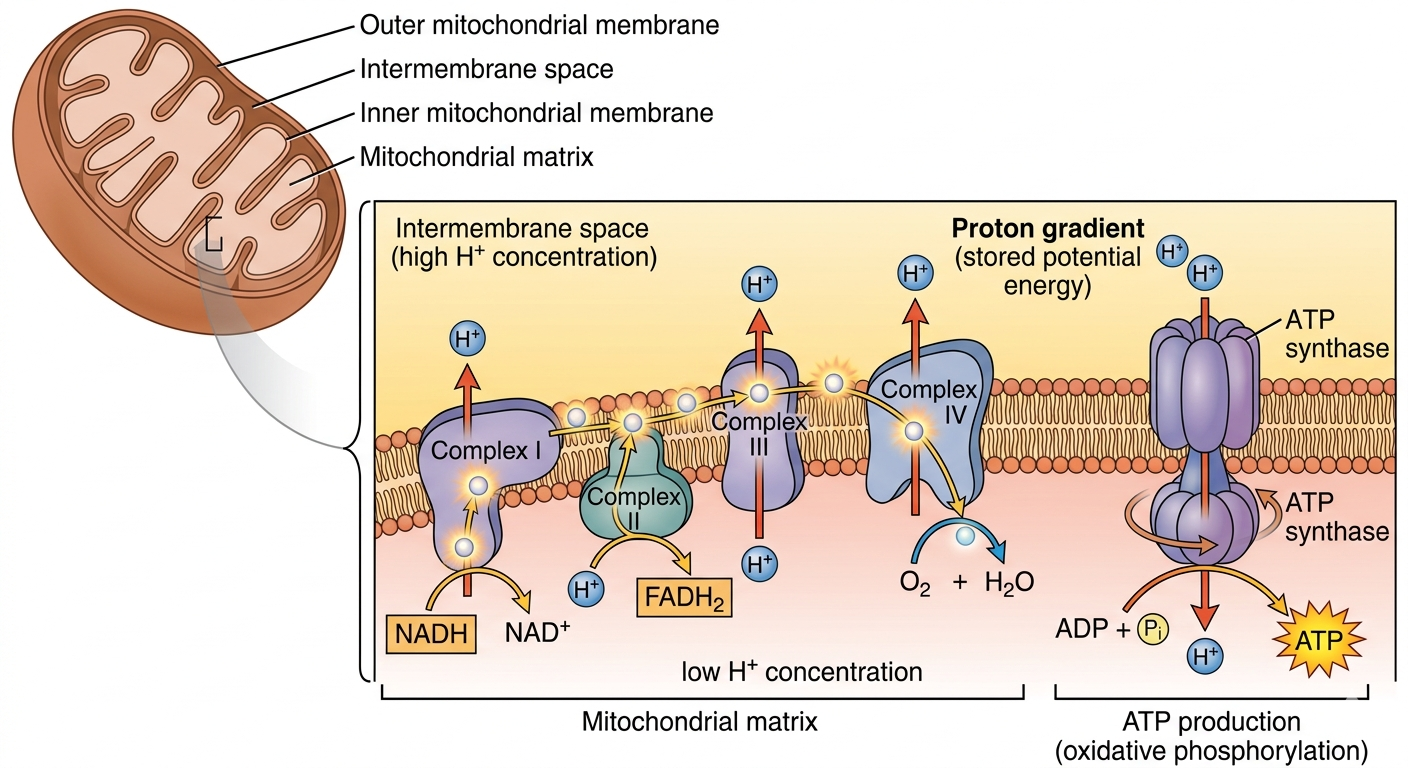
Figure 9. Electron Transport Chain. The electron transport chain uses high-energy electrons from NADH and FADH₂ to power proton pumping across the inner mitochondrial membrane. Oxygen acts as the final electron acceptor, forming water. The resulting proton gradient drives ATP synthase, producing most of the ATP in aerobic cellular respiration.
Fermentation
Fermentation, like cellular respiration, is a process cells use to extract energy from organic molecules such as glucose. Both pathways begin with glycolysis, where glucose is broken down into pyruvate and a small amount of ATP is produced. However, fermentation differs because it does not continue into the Krebs cycle or the electron transport chain. Since fermentation stops after glycolysis, it produces only a net gain of 2 ATP per glucose molecule, compared to the roughly additional 32 ATP generated during aerobic cellular respiration. This makes fermentation far less efficient at extracting energy from glucose. Even so, fermentation is extremely important because it allows cells to continue producing ATP when oxygen is absent or when oxygen cannot be used efficiently.
The key role of fermentation is not just ATP production, but the regeneration of NAD⁺. During glycolysis, NAD⁺ is converted into NADH as it accepts electrons and hydrogen ions. If NAD⁺ were not replenished, glycolysis would stop because there would be no available electron carriers left to accept more electrons. Fermentation solves this problem by transferring electrons from NADH back onto organic molecules, converting NADH into NAD⁺ so glycolysis can continue.
Although fermentation is much less efficient than aerobic respiration, it allows cells to survive and continue producing ATP when oxygen is absent.
Alcoholic Fermentation
One common example is alcoholic (ethanol) fermentation, used by yeast and some microorganisms. In this pathway, one glucose molecule is first broken down by glycolysis into two pyruvate molecules. This process generates 2 ATP and 2 NADH. The two pyruvate molecules are then converted into acetaldehyde, releasing carbon dioxide (CO₂) as a waste product. Finally, the acetaldehyde molecules accept electrons and hydrogen from NADH and are converted into ethanol. During this step, NADH is oxidized back into NAD⁺, allowing glycolysis to continue producing ATP.
Lactic Acid Fermentation
Another common form is lactic acid fermentation, which occurs in some bacteria and in animal muscle cells during periods of low oxygen availability. In this process, pyruvate directly accepts electrons from NADH and is converted into lactic acid, again regenerating NAD⁺.
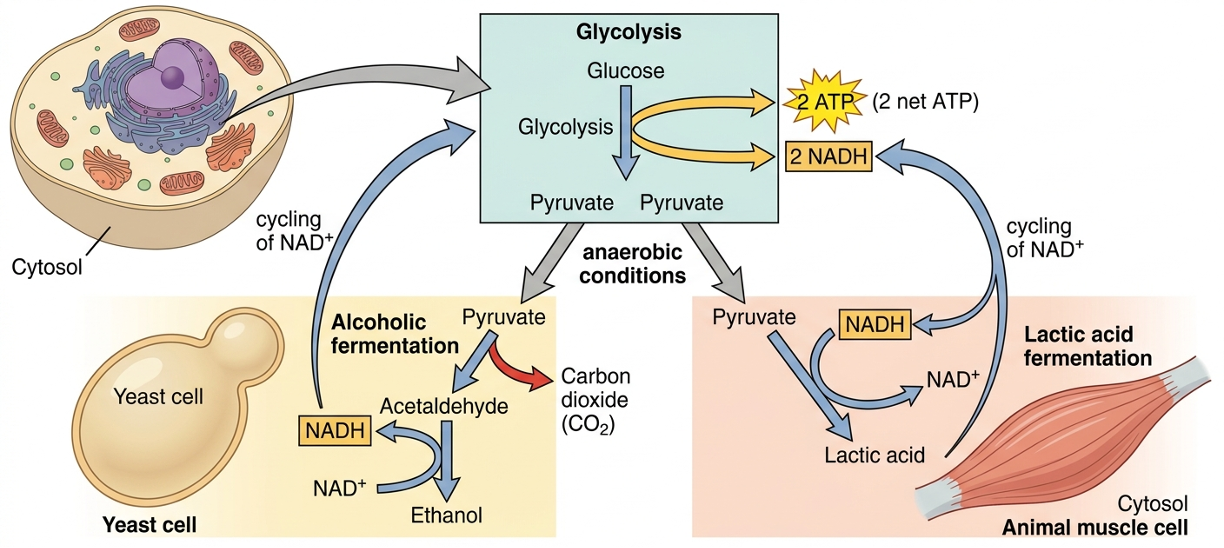
Figure 10. Fermentation. Fermentation allows cells to continue producing ATP when oxygen is absent by regenerating NAD⁺, which is required for glycolysis. In alcoholic fermentation, pyruvate is converted into ethanol and carbon dioxide, while in lactic acid fermentation pyruvate is converted into lactic acid. Although fermentation produces far less ATP than aerobic respiration, it enables cells to survive and generate energy under anaerobic conditions.
Why Cellular Respiration Matters
Cellular respiration is one of the most fundamental processes in biology because it powers nearly every activity within living organisms. From muscle contraction and nerve signaling to growth and reproduction, almost all biological work depends directly or indirectly on ATP produced through respiration. More importantly, cellular respiration demonstrates one of the central themes of biology: life depends on the controlled transfer of energy. Cells do not simply burn food like fire burns wood. Instead, they extract energy gradually through organized chemical pathways, capturing that energy in molecules like ATP and NADH. This careful management of energy is what allows living systems to maintain order, grow, reproduce, and ultimately remain alive.
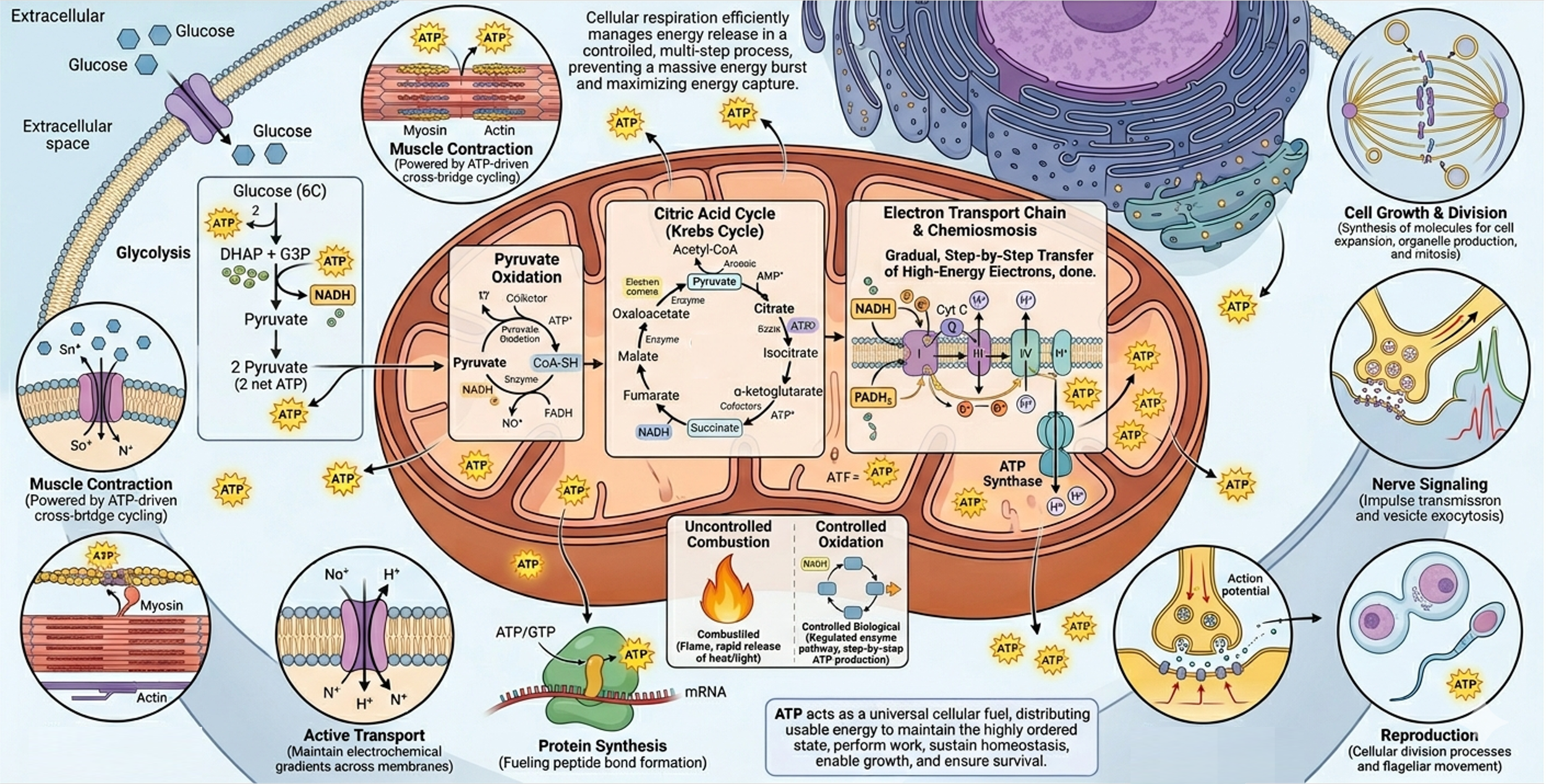
Figure 11. Cellular Respiration Review. Cellular respiration powers nearly all activities in living organisms by converting the chemical energy stored in food into ATP. Rather than releasing energy all at once, cells use controlled biochemical pathways and redox reactions to gradually transfer energy into usable forms such as ATP and NADH. This regulated flow of energy allows living systems to maintain order, grow, reproduce, and survive.